
Connecting cities, industries and resources
The transition towards a circular economy is not only a technological challenge. It requires cities, industries, researchers, public authorities and communities to understand new solutions, connect with one another and work together to transform the way resources are used.
This is at the heart of UNITED CIRCLES, a Horizon Europe project working to accelerate the transition towards zero-waste cities and decarbonised industries by demonstrating how urban waste streams can become valuable resources.
Through innovative Industrial-Urban Symbiosis value chains and Hubs4Circularity, UNITED CIRCLES is bringing together technologies, territories and stakeholders to close material, water and energy loops and create more sustainable and resilient industrial ecosystems.
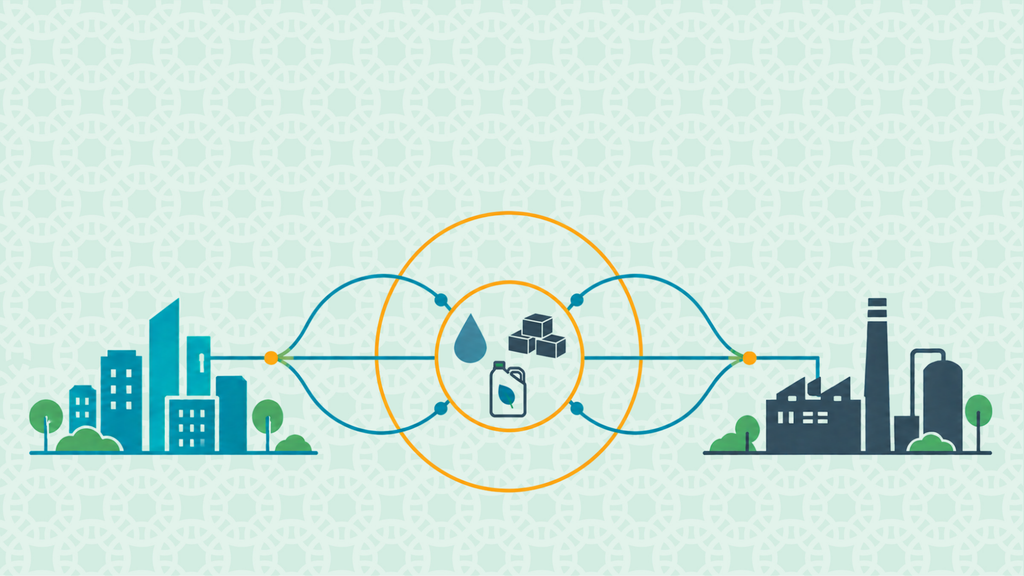
But innovation can only generate meaningful change when it reaches the people and organisations capable of putting it into practice.
That is where communication makes a difference.
As a partner supporting the Communication and Dissemination activities of UNITED CIRCLES, COMET Global Innovation works alongside the consortium to bring the project’s innovations, demonstrations and achievements closer to its audiences, turning complex developments into clear, engaging and accessible stories.
Communicating circularity with purpose
Making complex innovation understandable
UNITED CIRCLES addresses an ambitious challenge: demonstrating how cities and industries can collaborate to transform waste into new resources while reducing the consumption of virgin materials, water and energy.
The project focuses on three major urban waste streams: food waste, wastewater solids, and construction and demolition waste.
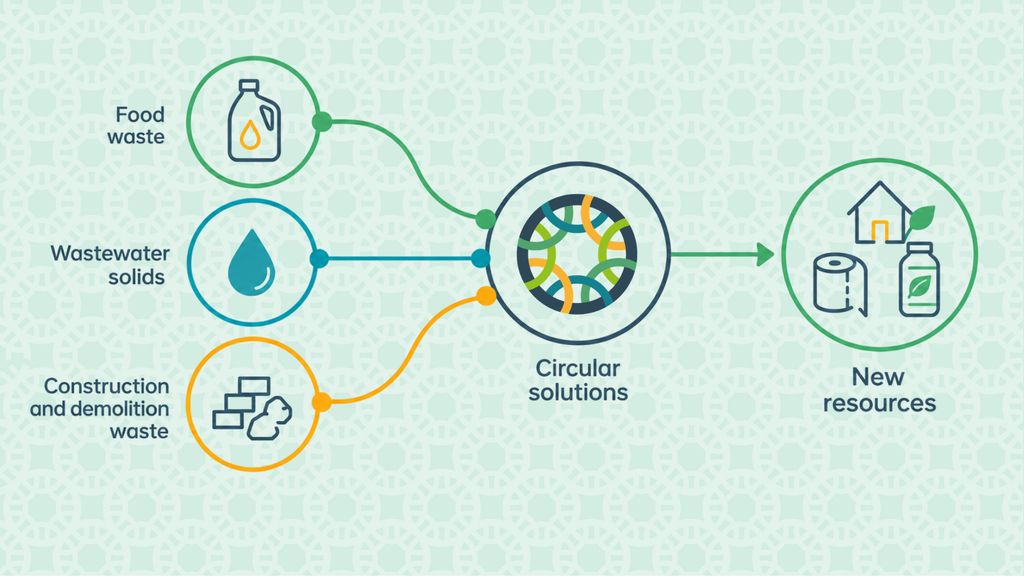
Across its demonstrators and Hubs4Circularity, partners are developing and integrating solutions designed to show what Industrial-Urban Symbiosis can look like in practice.
Communicating this work means going beyond technical results.
It means explaining why these innovations matter, showing how they can contribute to more circular territories and helping different audiences understand the opportunities created when cities and industries start thinking about resources as part of a connected system.
Through digital communication, project stories, events, communication materials, campaigns and other dissemination activities, COMET contributes to making UNITED CIRCLES and its results visible, understandable and relevant to audiences across Europe and beyond.
Circularity cannot happen in isolation.
Building effective Industrial-Urban Symbiosis requires collaboration between municipalities, industries, technology providers, researchers, waste and water operators, policymakers, investors, citizens and many other actors.
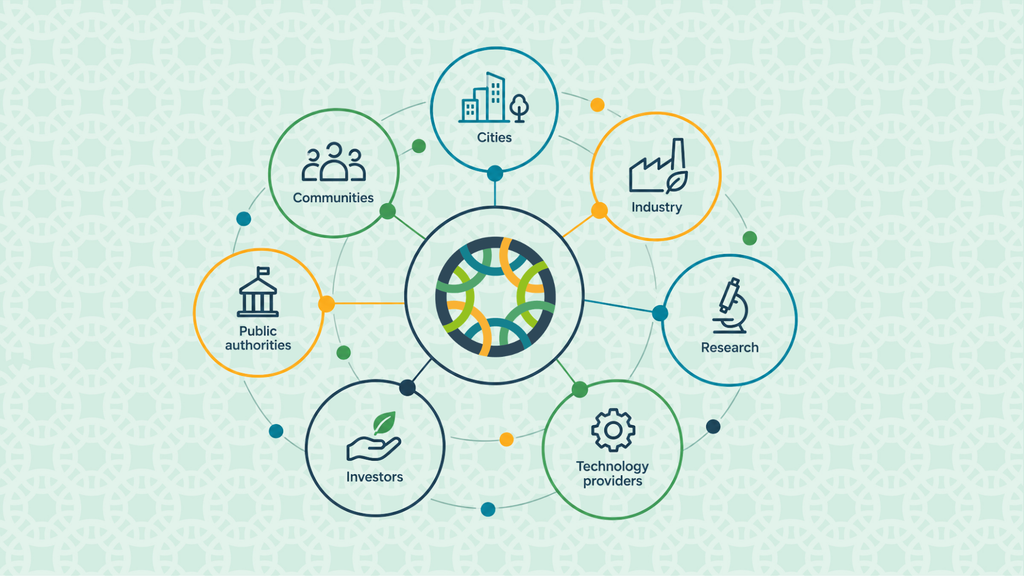
For this reason, stakeholder engagement is a fundamental part of UNITED CIRCLES.
Communication helps create spaces where these communities can discover solutions, exchange experiences and identify opportunities for collaboration.
Initiatives such as the project’s Communities of Practice illustrate this approach by bringing together stakeholders from different sectors and territories to discuss circular solutions, share experiences and explore how successful approaches can be adapted and replicated elsewhere.
Every partner has an important role to play in this process. Their technical expertise, local knowledge and stakeholder networks help connect UNITED CIRCLES with the organisations and communities that can contribute to, and benefit from, its results.
By combining these networks with a coordinated communication approach, the project is building a community around a shared ambition: turning circularity from an idea into something that can be implemented at territorial scale.
From demonstrations to lasting impact
UNITED CIRCLES is designed to demonstrate solutions in real industrial and urban environments.
But the ambition goes further than individual technologies or demonstration sites.
The knowledge, methodologies and collaboration models developed through the project can help other cities, regions and industries explore their own pathways towards circularity.
Communication and dissemination are essential to making this possible.
By documenting experiences, sharing lessons learned and giving visibility to the project’s solutions and achievements, UNITED CIRCLES can help its results reach beyond the consortium and demonstration regions, inspiring other cities, industries and territories to explore similar approaches to circularity.
More than communication: building a circular culture
For COMET, communicating UNITED CIRCLES means contributing to a broader cultural shift.
A circular economy requires us to rethink the relationship between cities, industries and resources. What is considered waste in one system can become a valuable input for another. Water can be recovered and reused. Materials can remain in productive cycles for longer. Energy and resource flows can be connected across sectors.
Technology makes these possibilities real.
People make them happen.
That is why communication is not simply about making the project visible. It is about connecting people with ideas, creating opportunities for collaboration and helping build the shared understanding needed to move from innovative demonstrations to systemic change.
Behind every circular solution are researchers, engineers, municipalities, companies, public authorities and communities working together to rethink how our cities and industries operate.
We are proud to help tell their stories.
Join the UNITED CIRCLES community
UNITED CIRCLES is building a European community around Industrial-Urban Symbiosis, Hubs4Circularity and the transition towards zero-waste cities and decarbonised industries.
Whether you represent a city, an industrial organisation, a research institution, a technology provider, a public authority or another initiative working on circularity, there are different ways to get involved.
Join the UNITED CIRCLES Stakeholder Community to connect with organisations and professionals working towards more circular cities and industries, exchange knowledge and experiences, and stay close to the project’s activities, events and emerging solutions.
And for those looking to take circularity from ambition to action, the project has developed a Hubs4Circularity Guidebook. Designed as a practical resource for cities, regions and other stakeholders interested in developing their own H4C, the Guidebook offers guidance and insights to support them along the way.
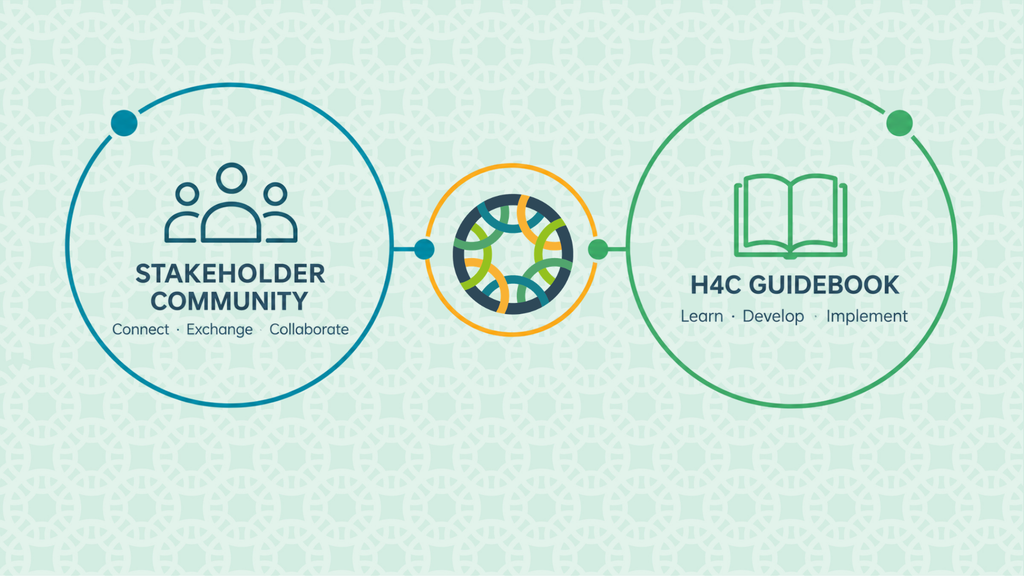
Together, the Stakeholder Community and the Guidebook provide two complementary ways to engage with UNITED CIRCLES: connecting with the people driving the transition and accessing practical knowledge to help put it into practice.
Follow the project’s latest developments, demonstrations, events and circular solutions through the UNITED CIRCLES website and communication channels, explore the Guidebook and become part of a growing network working to transform waste into resources and circular ambitions into real-world impact.
Together, we can close the circle.
Written by the COMET Global Innovation Team.